 Safety
 10 min
Online Shaadi, Safe Shaadi: Your Guide to Matrimonial Platform Safety
From red flags and scam tactics to choosing the right platform — a complete safety guide for navigating matrimonial platforms with confidence...
Read Article
Exploring how shifting dynamics, education, and modern values are redefining what families prioritize in a life partner...

"Honoring traditional family roots, guided by modern transparency."
Marriage in India has always carried deep emotional, cultural, and social significance—a unique institution that goes beyond the union of two individuals. Unlike many parts of the world where marriage is often viewed solely as a relationship between two individuals, Indian marriages are traditionally seen as the coming together of two families, two value systems, and two long-term visions for the future. Over the past few decades, rapid urbanization, education, technology, globalization, and changing social attitudes have transformed how Indians approach marriage.
While family involvement remains important, the qualities that define an ideal life partner have evolved significantly. Modern Indian families are no longer focused solely on traditional parameters such as caste, community, horoscope matching, or family status. Although these factors may still hold value for some households, there is now a stronger, more realistic emphasis on emotional compatibility, shared goals, career ambitions, trust, communication, and mutual respect. Today's generation seeks relationships that are balanced, healthy, and capable of adapting to the realities of modern life.
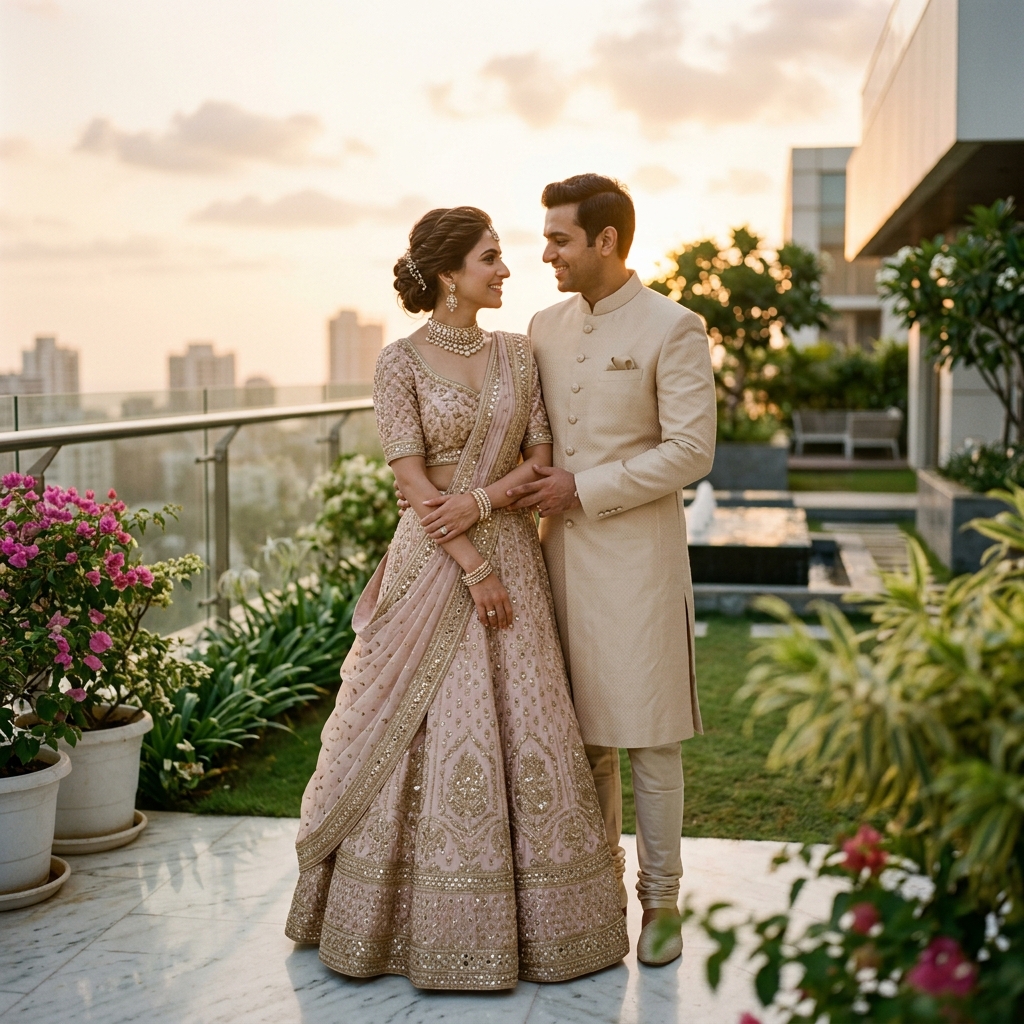
A contemporary Indian couple focusing on shared goals, equality, and mutual aspirations.
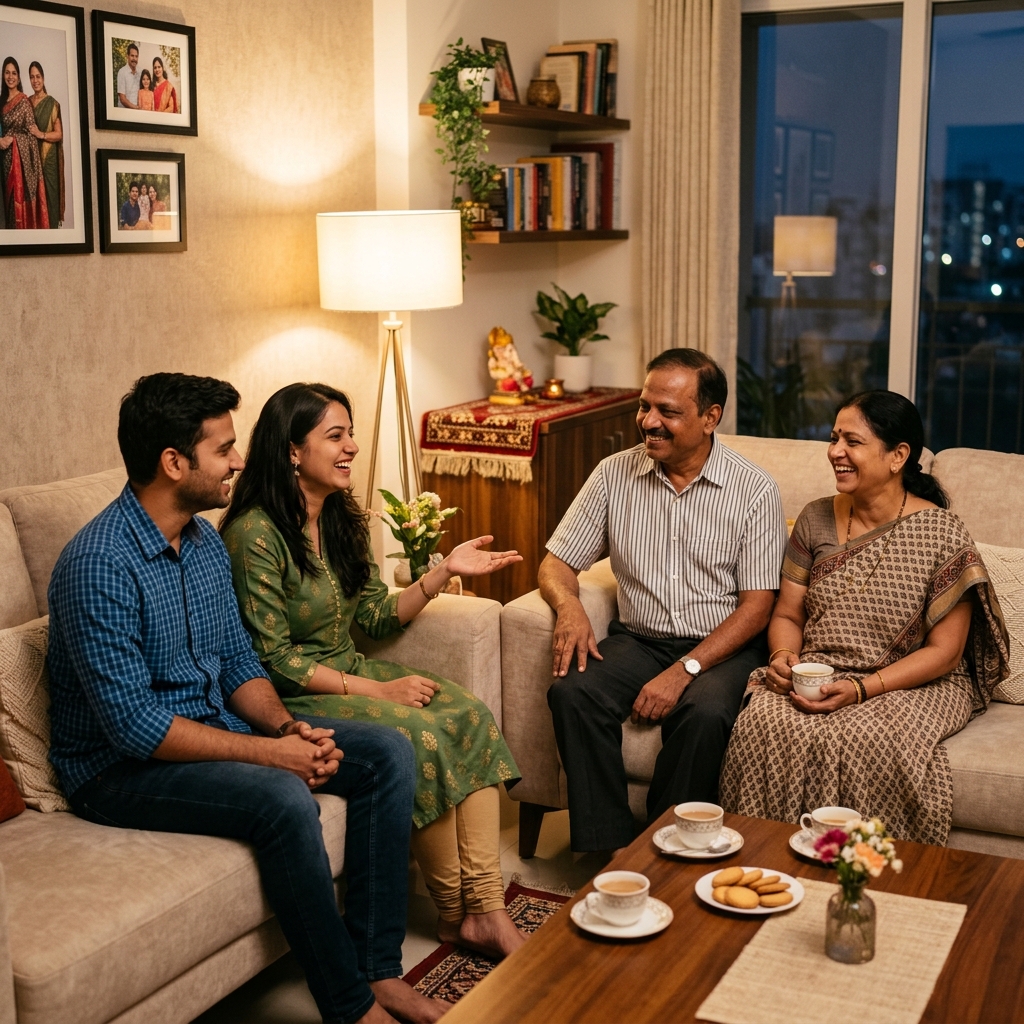
Parents, too, are gradually becoming more open-minded and supportive of their children's personal choices. As a result, the process of finding a suitable life partner in India has become more thoughtful, comprehensive, and emotionally driven than ever before.
For decades, horoscope matching and shared backgrounds played a central role in arranged marriages across many Indian communities, under the belief that astrological or social alignment determined long-term stability. Even today, many households continue to value these traditions. However, one of the biggest shifts in modern matchmaking is the growing importance of actual compatibility. Families increasingly understand that a successful marriage depends on how well two people understand each other rather than simply sharing a similar background or matching zodiac signs.
True compatibility includes communication style, personality, emotional needs, life goals, financial habits, and future expectations. Prospective couples are encouraged to spend time talking openly and understanding each other's mindset, lifestyle choices, habits, and ambitions before making a lifelong commitment.
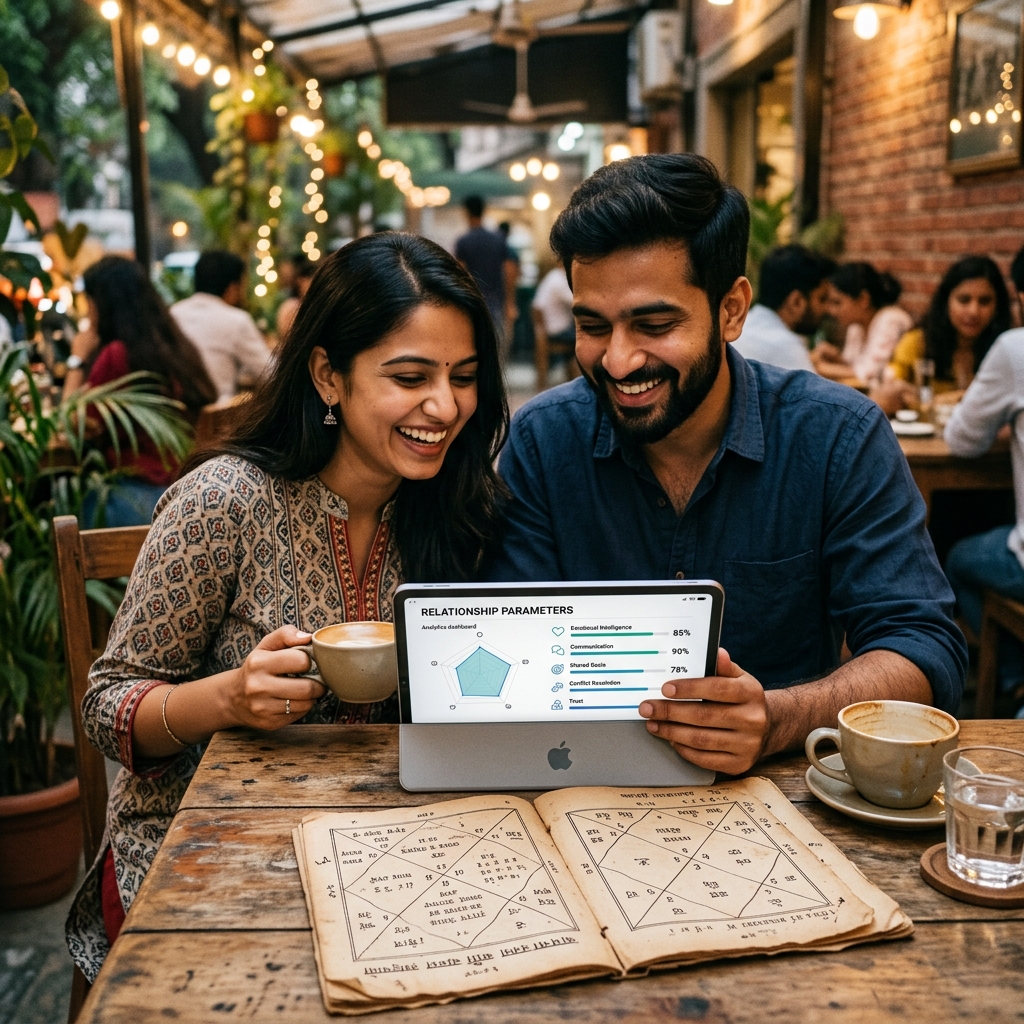
Moving from paper charts to emotional intelligence and open communication.
Discussions about career plans, living arrangements, family responsibilities, children, and lifestyle preferences help build clarity and reduce future misunderstandings. Families now recognize that shared values, emotional understanding, and mutual respect contribute far more to marital happiness than traditional matching criteria or horoscope alignment alone.
Education continues to be one of the most influential factors in modern Indian matrimony. Families often prefer partners who are educated, ambitious, career-focused, and capable of contributing to a stable, secure future together. However, the focus is no longer limited to academic degrees, high salaries, or prestigious job titles alone. Professional commitment, financial responsibility, work ethic, ambition, emotional maturity, and long-term growth potential are equally valued.

Mutual support and professional ambition form the baseline of modern dual-career households.
Today's families also appreciate relationships where both partners support each other's ambitions. Women's education and professional achievements are respected and valued more than ever before, and dual-income households have become increasingly common. A partner who encourages personal growth, professional development, and career aspirations is often viewed as an asset to the relationship. Families understand that long-term success in marriage depends on teamwork, mutual support, and shared responsibilities, with couples contributing equally toward financial planning and household management.
Despite changing times, modernization, and new ways of thinking, family values remain deeply important in Indian society. Respect for elders, kindness, humility, responsibility, honesty, and strong moral principles continue to be qualities that many families actively seek. In the Indian context, marriage is still viewed as a long-term partnership that extends beyond the couple themselves to connect two family ecosystems.
Families often look for individuals who can maintain healthy, supportive relationships not only with their spouse but also with extended family members and relatives, while simultaneously respecting personal boundaries. The ability to adapt to different family environments without losing one's own individuality is considered an extremely valuable and admirable quality. Strong family values provide domestic stability and help create supportive relationships that can endure life's challenges together.
One of the most noticeable shifts in modern matchmaking is the growing importance of emotional intelligence and communication as key priorities. Families increasingly understand that academic success, prestigious careers, or financial stability alone cannot guarantee a successful, lasting marriage. The ability to communicate openly, resolve disagreements respectfully, handle conflicts calmly, and support a spouse emotionally determines the actual strength of a relationship.

A quiet moment of empathy, reflecting the transparency required in lifelong relationships.
Qualities such as empathy, patience, emotional stability, self-awareness, and maturity are highly valued during the matchmaking process. Today's generation is also far more comfortable discussing mental health, emotional well-being, and relationship expectations before marriage. This openness helps couples build stronger, authentic connections and prevent misunderstandings later in life. Modern families are recognizing that a partner who listens, understands, and communicates honestly is just as crucial as professional success.
Modern marriages in India are increasingly built on partnership, equality, and mutual respect rather than control or dependency. Families today recognize that healthy, enduring relationships allow both individuals to maintain their own identity, ambitions, hobbies, interests, and personal goals.
Rather than expecting one partner (historically often the woman) to sacrifice their entire identity for the relationship, there is a growing appreciation for mutual support and shared growth. Respecting each other's personal space, career aspirations, lifestyle choices, and individual opinions contributes to a healthier domestic environment. Couples who can balance individuality with togetherness are better equipped to build fulfilling, balanced relationships where neither partner feels overshadowed.
India's immense cultural diversity means that traditions, languages, food habits, and customs vary widely even between neighboring regions. While cultural compatibility remains important for many households, families today are becoming increasingly open-minded about intercultural and interfaith marriages.
Rather than focusing solely on rigid social boundaries, families are more willing to prioritize personal character, mutual respect, and adaptability. A willingness to respect different traditions, embrace new experiences, and find common ground is highly valued. The ability of both partners to celebrate and integrate each other's customs helps build harmonious, culturally rich relationships where differences are viewed as strengths rather than friction points.
Trust is the absolute foundation of a successful marriage. Families place a premium on partners who are honest, transparent, and sincere about their intentions, responsibilities, finances, and expectations from marriage. In an era of digital matchmaking and social media, establishing strong trust and open communication before tying the knot is more critical than ever.
Transparency helps establish confidence between partners and reduces the likelihood of misunderstandings later. Integrity also matters greatly; individuals who demonstrate consistency between their words and actions are viewed as dependable and trustworthy. Modern families increasingly value this authenticity over superficial appearances, encouraging couples to have direct, honest discussions about career plans, financial liabilities, and long-term commitments early on.
While physical attraction remains a natural part of choosing a partner, modern Indian families are gradually moving away from the unrealistic beauty standards that once dominated traditional matchmaking advertisements and conversations.
Today, qualities such as character, intelligence, confidence, emotional stability, kindness, and resilience are considered far more important than appearance alone. Families understand that long-term compatibility depends on qualities that contribute to trust, communication, and mutual respect. As a result, personal character, values, and personality frequently outweigh superficial, cosmetic criteria when choosing a life partner.
Technology has completely transformed the way people search for life partners in India. Matrimonial websites, dating platforms, and social media have expanded opportunities for individuals to connect with potential partners beyond geographical and social boundaries.
Families today often combine traditional matchmaking methods with digital platforms to find suitable matches. These platforms allow individuals to filter preferences based on education, profession, lifestyle, interests, and values, making the process more personalized and efficient.
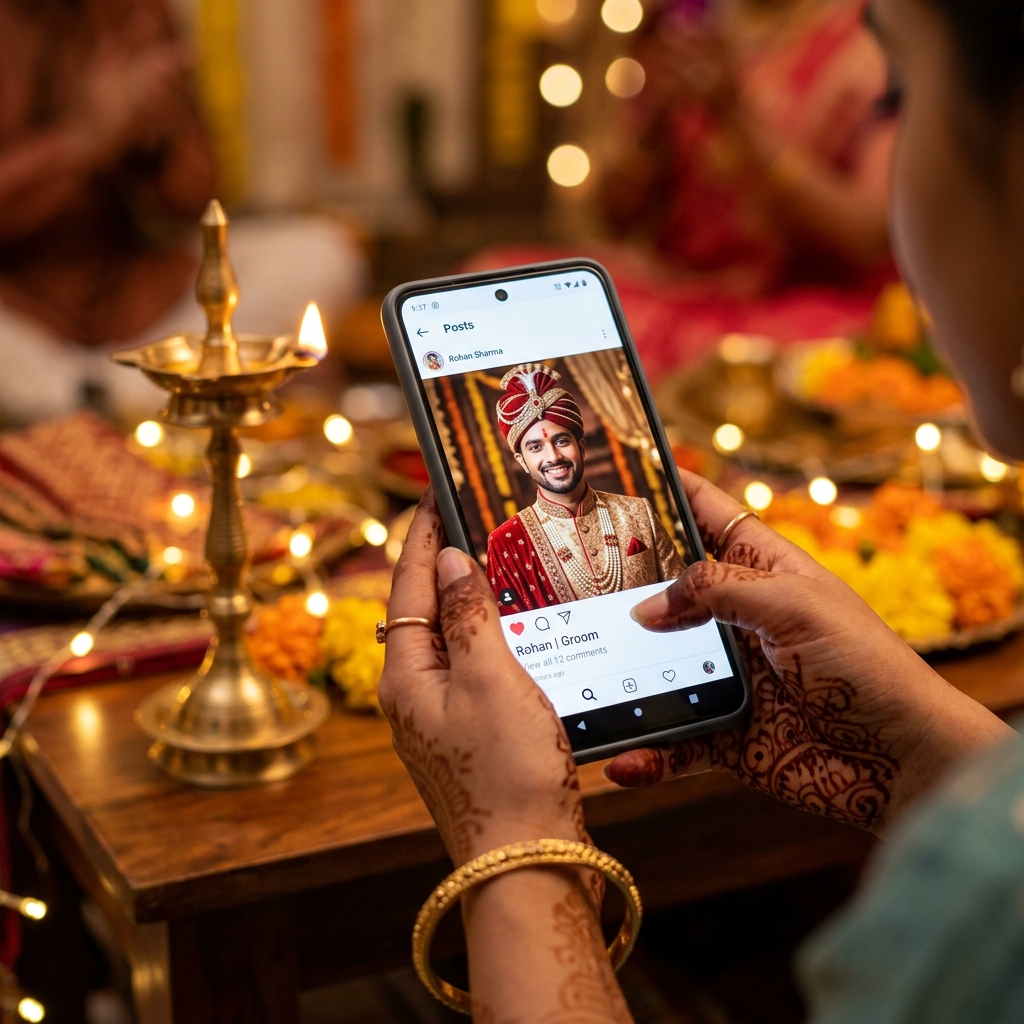
Traditional roots meet modern convenience through profile filtering and virtual communication.
At the same time, technology has also encouraged more direct communication between couples before marriage. Video calls, online conversations, and social interactions help individuals understand each other better before involving families in the final decision. This blend of tradition and technology reflects how Indian society is adapting to modern relationship dynamics while still preserving cultural values.
The expectations of Indian families have evolved alongside society itself. While traditions and respect for roots still play an important role, modern families increasingly prioritize compatibility, emotional intelligence, mutual respect, career stability, trust, and personal growth. The definition of the ideal life partner is no longer defined by a single factor or static checklist, but by a balanced combination of qualities that contribute to a healthy and fulfilling relationship.
As India continues to balance tradition with modernity, the matchmaking process is becoming more thoughtful, inclusive, practical, and emotionally aware. Families and individuals alike are recognizing that successful marriages are built not only on shared backgrounds but also on shared aspirations, understanding, and commitment. The future of Indian matrimony lies in finding partners who can grow together, support one another, and build a life based on trust, respect, and companionship—partnerships that grow stronger with time and genuine understanding.
- Written by Kanakaboina Ankith Raj & Kashish Rajpal
Of urban Indians prefer a 'semi-arranged' approach with personal choice.
State family approval is vital for maintaining long-term domestic harmony.
Prioritize mutual career support and joint decision-making.
 Safety
From red flags and scam tactics to choosing the right platform — a complete safety guide for navigating matrimonial platforms with confidence...
 Safety
Steps to take to ensure the profile you are communicating with is genuine, verified, and transparent. Protect yourself and your family by knowing what to check and what to ask.
 Dating Tips
Your matrimonial profile is more than a bio — it is your first impression. Here’s how to write a profile that feels genuine, attractive, and trustworthy without sounding forced or fake.
Join thousands of verified members searching for meaningful relationships. Your journey to forever starts here.